How Railway Timetables Made Greenwich Time Britain’s Standard
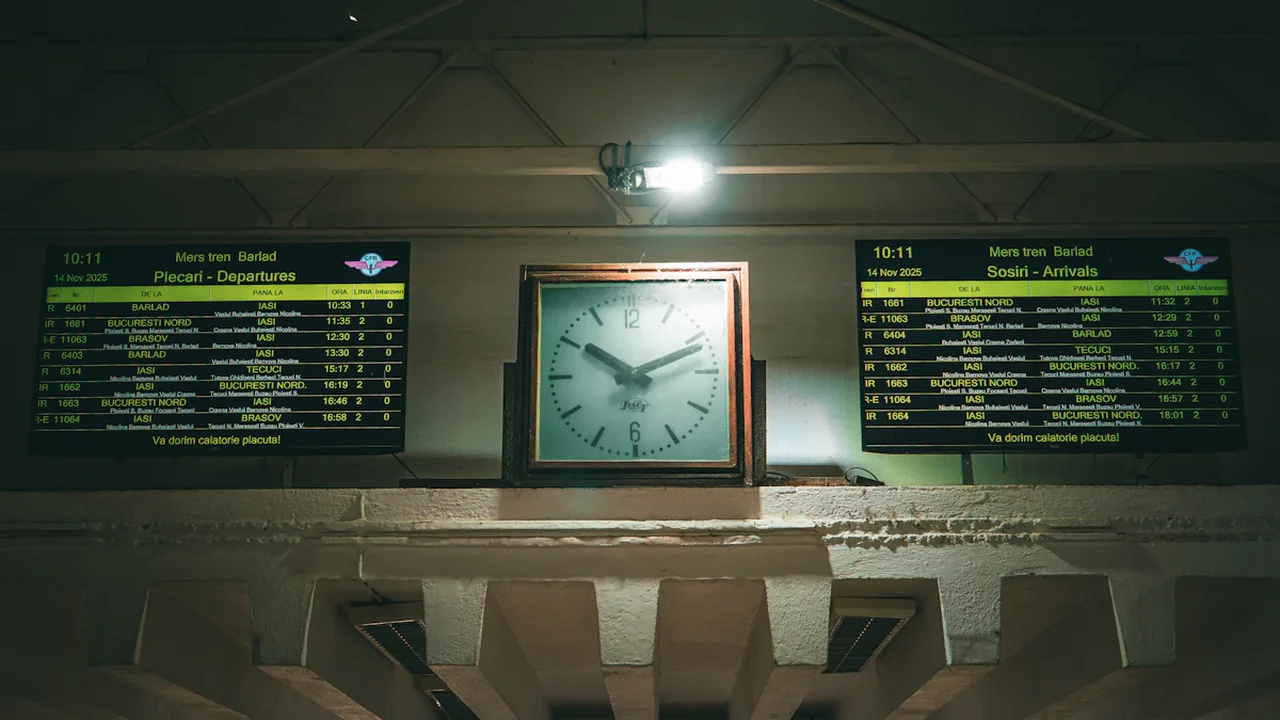
A train journey depends on more than a timetable: passengers and railway staff need clocks to agree on when it leaves. In nineteenth-century Britain, local clocks showed different times from place to place, making schedules harder to coordinate. Greenwich Mean Time offered railway companies a shared reference, and its growing use helped make Greenwich central to the way Britain—and later much of the world—keeps time.
Why local clocks caused railway problems
Before standard time, towns commonly set their clocks by local solar time: noon came when the Sun was highest in that particular place. Because the Sun reaches that point at slightly different moments across Britain, clocks in different towns did not show precisely the same time.
That variation was manageable when people’s routines stayed local. Railways linked places whose clocks differed, however, and a timetable needed a consistent basis. A departure time could be confusing if the station clock and a traveller’s clock followed different local times. Royal Museums Greenwich describes the difficulties created by these differences as a force behind the move towards standard time based on the Greenwich meridian.
How railway companies adopted Greenwich Mean Time
Greenwich Mean Time, or GMT, provided a common reference tied to the meridian passing through Greenwich. Railway companies began using it to coordinate their timetables across routes and towns. Royal Museums Greenwich reports that most railway companies had adopted GMT by the 1840s.
The change made railway schedules easier to interpret: a published time could refer to the same standard across a company’s network, instead of shifting with each town’s local clock. For passengers, that helped make journeys between places more predictable. Railways did not create the need for shared time on their own, but their interconnected schedules made the practical case for it hard to ignore.
This is why the story of standard time is also a story about transport. The railway timetable turned a difference that had once been local and manageable into a coordination problem affecting journeys across distance. A common clock helped people organise those journeys using the same reference.
Greenwich became the international reference point
Britain’s railway use of GMT came before its international recognition. In 1884, the International Meridian Conference established Greenwich as the Prime Meridian and recommended a global time-zone system based on GMT, according to Royal Museums Greenwich. The decision gave countries a shared geographic reference for measuring longitude and organising time zones.

A meridian is a line of longitude running from pole to pole. The Prime Meridian is the chosen zero line from which longitude is measured east and west. Greenwich’s role in this system grew out of its established importance in timekeeping, but the international decision was distinct from the earlier railway adoption of GMT.
The sequence matters: railway companies had made common time useful for coordinating travel decades before the conference gave Greenwich an international role. The conference then helped establish a global framework built around a common reference.
A reference meridian is not a seasonal clock change
Greenwich’s Prime Meridian and GMT are often mentioned alongside seasonal clock changes, but they describe different things. The meridian is a geographic reference line. GMT is a time standard associated with Greenwich. Seasonal clock changes, by contrast, involve adjusting clocks at particular times of year; they are not the same as choosing a meridian or creating a time-zone framework.
Keeping those ideas separate makes the history clearer. Railway companies needed consistent times for schedules. The 1884 conference addressed an international reference and a system of time zones. Seasonal adjustments are a separate part of how clocks may be used, rather than the reason Greenwich became the Prime Meridian.
Why Greenwich still matters to everyday time
The practical idea behind railway standard time remains familiar: shared schedules work best when everyone uses the same reference. Today, people coordinate trains, appointments and communications across places using agreed time standards and time zones. Greenwich’s history shows how a local problem—clocks differing from town to town—helped push Britain towards a common system and connected that system to an international framework.
Royal Museums Greenwich traces both parts of the story: railway companies’ adoption of GMT by the 1840s and the International Meridian Conference’s decision in 1884. Together, they explain why Greenwich is more than a point on a map: it became a reference for coordinating time across distance.
Source: Royal Museums Greenwich
Context & actions About this article
Source check Historical context
Royal Museums Greenwich describes the railway adoption of GMT and Greenwich’s international role in 1884.
- Railway companies’ adoption of GMT by the 1840s
- International Meridian Conference decision in 1884
- Difference between a reference meridian and seasonal clock changes
- Source
- Royal Museums Greenwich
- Scope
- Greenwich, London
- Updated
- 2026-10-08 13:39
Source check
Report a trust issue
Send a clear signal to community moderation if the source, facts or context need review.


Comments