How the Battle of Hastings Changed England’s Rulers
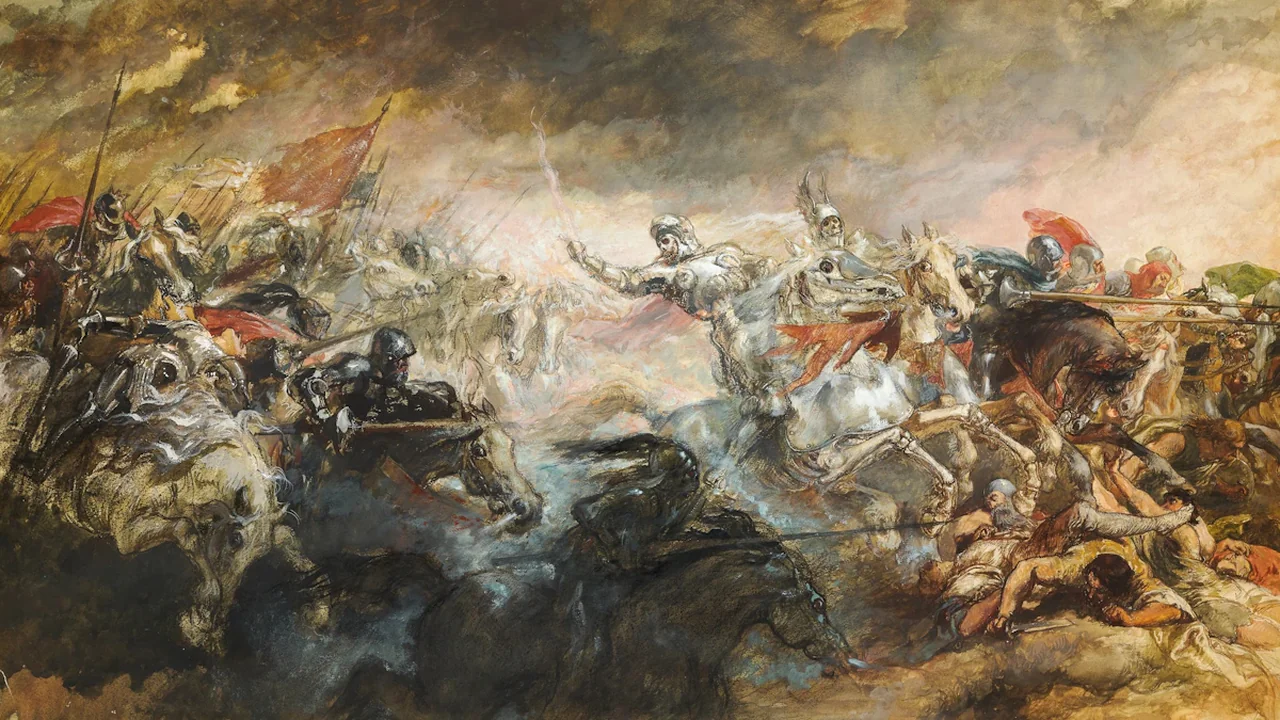
On 14 October 1066, William of Normandy defeated King Harold Godwinson at the Battle of Hastings. The anniversary marks a turning point in England’s succession crisis: it began the transfer of the crown, land and leading offices to Norman rule. William’s coronation in London that Christmas was the next major milestone, though securing the kingdom took longer than winning the battle.
Why England faced a succession crisis in 1066
King Edward the Confessor died on 5 January 1066 without a direct heir. Harold Godwinson, a powerful English earl, was chosen as king and crowned the following day. William, Duke of Normandy, also claimed the throne, maintaining that Edward had promised it to him and that Harold had sworn to support his claim. The precise terms and weight of those claims remain debated.
Harold’s claim had immediate backing among leading Englishmen, but it did not settle the question for William. Edward’s death therefore became a struggle over who could command the kingdom. William began assembling an invasion force across the Channel, making the rival claims a matter of military as well as political power.
Read also: Battle of Hastings: What Happened on 14 October 1066
Harold fought another invasion before Hastings
The Norman landing was not England’s only military crisis that year. In September, King Harald Hardrada of Norway invaded in support of his own claim, accompanied by Harold’s estranged brother Tostig. Harold marched north and defeated them at the Battle of Stamford Bridge on 25 September.
William’s forces landed in southern England soon afterward. Harold hurried south with his army, covering a long distance in days. This sequence helps explain the circumstances in which the armies met, but historians cannot know exactly how fatigue affected the outcome. The northward campaign and rapid return also show that Harold’s challenge in 1066 involved more than one rival claimant.
What happened at the Battle of Hastings
The armies fought on 14 October near Hastings, in what is now East Sussex. Harold’s English troops formed a defensive line on high ground, while William’s army included archers, infantry and cavalry. English forces relied heavily on infantry and the shield wall, a formation designed to hold against attacks.
The battle lasted through much of the day. Norman attacks initially failed to break the English line; at points, parts of William’s army fell back. The familiar account that a feigned retreat drew English troops downhill is plausible and appears in traditional narratives, but the precise sequence of maneuvers is not certain.
The English line eventually broke, and Harold was killed. His death is central to accounts of the battle, but details of exactly how he died are disputed. The Bayeux Tapestry is an important near-contemporary source, though its imagery does not resolve every question about the final moments. The broad result is clearer than every detail of the fighting: William’s victory removed Harold and opened the way to a change in who ruled England.
William’s victory became a takeover of power
Winning the battlefield did not instantly give William control of every part of England. He advanced toward London, faced resistance and took steps to secure his position. On 25 December 1066, he was crowned king at Westminster Abbey. The coronation marked the transfer of the crown, while the conquest and consolidation of Norman rule continued beyond it.
William’s government replaced much of the old English ruling elite with Norman nobles and churchmen. Land was redistributed to supporters, while English communities and institutions came under new lords. This changed more than the occupants of the royal court: control of estates also meant control of local resources, obligations and authority. For people living under those estates, the new order was experienced through who held power locally as well as through the identity of the king.
Norman rule reshaped land and government
The conquest did not erase England’s existing systems overnight. William relied on some English administrative practices while placing new leaders above them. Over time, Norman French became the language of the ruling class, and England’s connections with Normandy drew the kingdom more closely into continental politics.
Resistance continued after the coronation, and William’s campaigns to assert control could be severe. The scale and pace of change varied across the country. It is more accurate to describe the Norman Conquest as a process than as a single moment on the battlefield: Hastings decided the immediate military contest, but political control, landholding and local authority changed over time.
The next clear milestone after the battle was William’s coronation at Westminster Abbey on Christmas Day 1066. It established him as king in ceremony and law; the subsequent years would determine how securely Norman rulers could hold England.
Source: English Heritage
Context & actions About this article
Source check Historical context
This account draws on English Heritage and Encyclopaedia Britannica, while noting where surviving evidence leaves details uncertain.
- Battle date: 14 October 1066
- Harold’s death is recorded, but its exact circumstances are disputed
- William was crowned at Westminster Abbey on 25 December 1066
- Source
- English Heritage
- Scope
- England
- Updated
- 2026-10-13 09:42
Source check
Report a trust issue
Send a clear signal to community moderation if the source, facts or context need review.



Comments