Battle of Hastings: How William Won England’s Crown
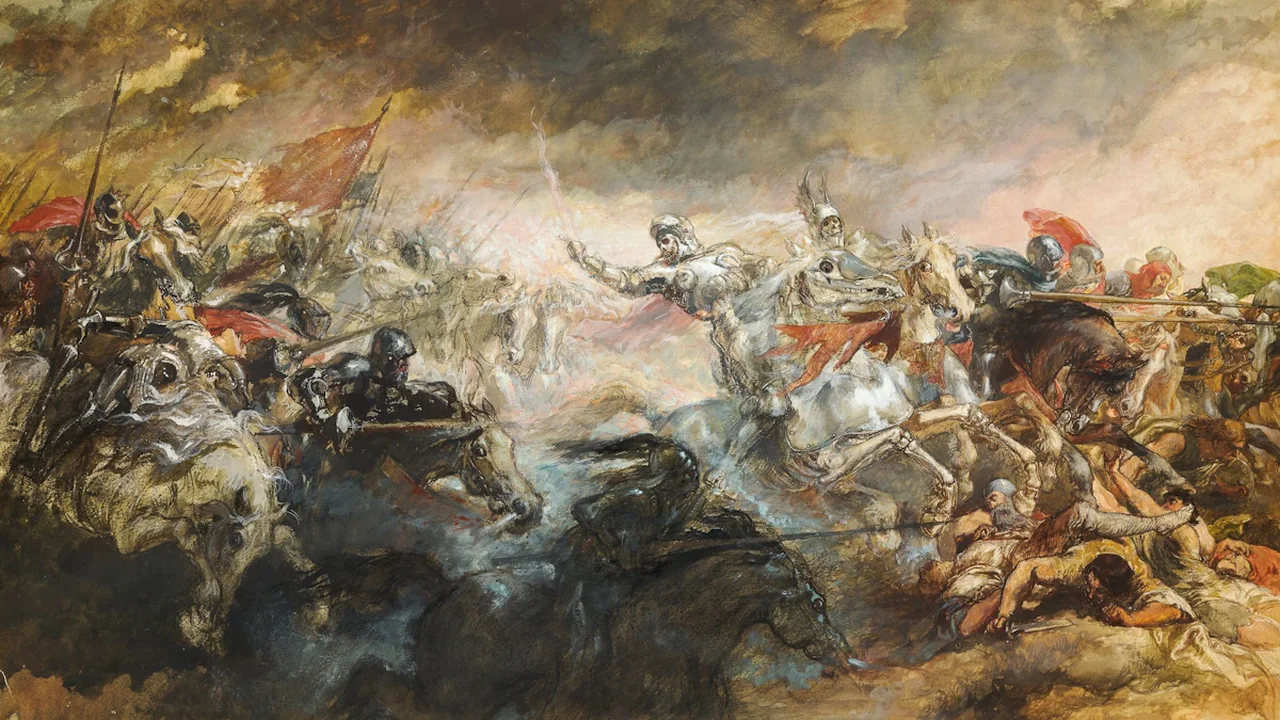
On 14 October 1066, William, Duke of Normandy, defeated King Harold II near Hastings, in what is now East Sussex. With the anniversary approaching, the battle’s significance is clear: it changed who held England’s throne. But it did not complete the Norman conquest in a single day. Resistance and political change continued, and William’s coronation on 25 December 1066 became the next decisive milestone.
14 October 1066: A battle near Hastings
The Battle of Hastings was fought near the town of Hastings, in present-day East Sussex. William’s Norman forces faced Harold’s English army after a year of competing claims to the crown and military campaigns across England. The location and date place the battle within a wider struggle for rule, rather than as an isolated encounter between two armies.
The date is well established, but some details of the battle remain debated. Accounts and later retellings differ on how events unfolded, so familiar descriptions of particular moments should not automatically be treated as certain. The broad outcome, however, is central to the history of the succession: Harold was defeated, and William’s claim gained decisive military force.
Read also: How the Battle of Hastings Changed England’s Rulers
Why William and Harold both claimed the throne
The succession crisis followed the death of King Edward the Confessor in January 1066. Harold, a powerful English nobleman, was crowned Harold II. William, Duke of Normandy, also claimed that Edward had promised him the throne and argued that Harold had previously supported his claim. The exact nature and force of those promises are disputed.
A further claimant, Harald Hardrada of Norway, invaded northern England with Harold’s estranged brother Tostig. Harold II defeated them at the Battle of Stamford Bridge on 25 September. He then had to march his army south to meet William’s invasion, which had landed in England later that month.
This sequence helps explain the pressures surrounding Hastings. Harold’s army had already fought a major battle in the north, while William’s invasion formed part of a wider struggle over who would rule England. Hastings settled the immediate contest between William and Harold on the battlefield, but the transfer of political authority still had to take place across the country.
Hastings changed the succession; conquest continued
Harold’s defeat removed the king who had taken the throne in January. William’s victory gave his claim decisive military force, but control of the country did not pass to him everywhere at once. The conquest depended on further campaigning, political negotiation and the establishment of Norman authority.
William was crowned king of England in Westminster Abbey on 25 December 1066. That coronation marked a major step in the transfer of rule, while the broader consolidation of Norman power continued beyond the ceremony. The distinction matters: Hastings was the turning point in the succession struggle, not a one-day end to all resistance or political change.
William’s victory opened the way to a new ruling dynasty and lasting changes in England’s government and elite. The battle explains how the crown changed hands through military defeat; the coronation records the next confirmed step in William’s formal rule.
What the Bayeux Tapestry can—and cannot—show
The Bayeux Tapestry is one of the best-known visual sources for the events surrounding the conquest. Its embroidered scenes depict the rival claims, invasion and battle, offering a vivid account of how William’s side presented the story. It is a medieval narrative, however, not a neutral eyewitness transcript of every moment.
Historians compare the tapestry with written accounts and other surviving evidence. They consider who produced each source, when it was made, what it could have witnessed and what purpose it may have served. Comparing accounts helps distinguish well-supported facts, such as the battle’s date and outcome, from disputed details of tactics, individual actions and the battle’s precise sequence.
The evidence supports the central change: Harold II was defeated and William went on to become king. It does not make every later image or dramatic detail certain. Reading the tapestry alongside other accounts gives a clearer sense of both the event and the limits of what can be known.
The next milestone after Hastings
For readers following the conquest chronologically, the next verifiable milestone is William’s coronation on 25 December 1066. Hastings explains how the crown changed hands on the battlefield; the coronation shows when William formally took the English throne. The wider Norman takeover, and the resistance it faced, continued after both dates.
Source: English Heritage, Battle Abbey
Context & actions About this article
Source check Historical context
The account distinguishes the established date and outcome from details of the battle that historians continue to debate.
- Battle date: 14 October 1066
- Battle location: near Hastings, East Sussex
- Bayeux Tapestry treated as a medieval narrative source
- Coronation milestone: 25 December 1066
- Source
- English Heritage, Battle Abbey
- Scope
- East Sussex, England
- Updated
- 2026-10-12 09:45
Source check
Report a trust issue
Send a clear signal to community moderation if the source, facts or context need review.




Comments