How to Compare Fuel Costs Before a UK Autumn Drive
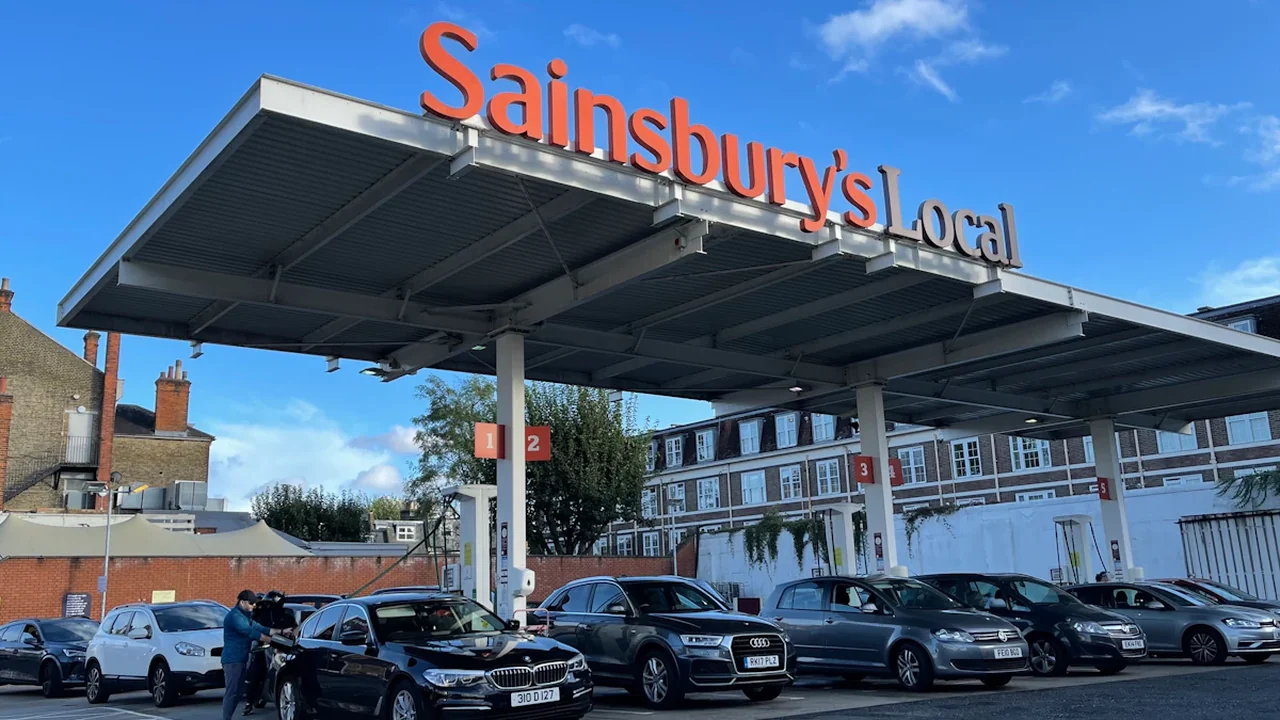
Before a longer autumn drive, compare current forecourt prices near your route and estimate how much fuel your own car will use. A low price per litre does not automatically make a station the cheapest option overall: the extra distance to reach it also uses fuel and may add time to your journey.
Calculate how much fuel your route may use
Start with the distance of your planned route and your vehicle’s fuel economy. Use the distance for the full journey you want to budget for, including the return leg if you are calculating a round trip. If your car’s economy is shown in miles per gallon (mpg), convert it to litres per 100 kilometres (L/100 km) before using the formula, or use a calculator that accepts UK mpg.
For a vehicle with fuel economy in L/100 km:
Fuel needed (litres) = distance (km) × fuel economy (L/100 km) ÷ 100
Then estimate the cost at a particular forecourt:
Trip fuel cost = fuel needed (litres) × price per litre (£/litre)
For example, once you have your route distance, your car’s typical fuel economy and a current local price, enter those three figures to estimate the fuel cost. The result is only as useful as the inputs: use the route you expect to drive, not the straight-line distance between your start and destination. Add known detours to the distance.
Compare stations using the same route
Check the fuel type your vehicle uses, since petrol and diesel prices differ. Look at stations near your starting point, destination and planned route, and note each listed price and when it was updated. An older listing may not match the price available when you arrive.
For a fair comparison, keep the vehicle and journey assumptions consistent. For each candidate station, estimate the cost using its price per litre. If reaching it adds a detour, include that distance in the route calculation too. This lets you compare the cheaper litre price against the extra fuel needed to get there.
A station already on your route may be a more sensible choice than one with a lower listed price that takes you well out of your way. You do not need to choose the absolute cheapest listing; compare the likely total fuel cost for the journey and the location of the stop.
Check local prices before setting off
The Competition and Markets Authority (CMA) publishes road fuel price transparency information and monitoring material for UK petrol and diesel markets. Its collection explains the CMA’s fuel-market monitoring work and provides broader market context. It is not a live quote for a particular station, so use a current local station listing to check a forecourt’s price before you set off.
Check the listing’s update time as well as the price, and verify locally where possible. If the route changes or you plan to refuel later in the journey, recheck nearby options against the new distance. A price that was useful for your original route may not be the best comparison after a detour or change of plan.
Understand the limits of the estimate
A trip calculation is an estimate, not a guaranteed bill. Actual fuel use can differ with traffic, weather, load, speed, road type and driving style. Wet roads or congestion may affect an autumn journey, but the effect depends on the particular route and vehicle; a calculation cannot predict those conditions precisely.
Price listings may also be incomplete, delayed or different from the price available when you arrive. The CMA’s market monitoring does not replace checking an individual forecourt. Before departure, use your planned route distance, your vehicle’s typical fuel economy and current prices for the right fuel type to compare likely costs. Recalculate if your route changes.
Source: Competition and Markets Authority
Context & actions About this article
Source check Price and calculation note
The CMA publishes UK petrol and diesel market monitoring; the trip estimate uses your route distance, vehicle economy and a current local price.
- Check the listed price for your fuel type and its update time.
- Use the total route distance, including any detour to refuel.
- Treat calculated fuel use as an estimate because driving conditions affect economy.
- Source
- Competition and Markets Authority
- Scope
- United Kingdom
- Updated
- 2026-10-28 10:57
Source check
Report a trust issue
Send a clear signal to community moderation if the source, facts or context need review.

Comments