How to Compare UK Petrol and Diesel Prices Before a Long Drive

A cheaper petrol or diesel price can be worth a stop on a longer UK drive, but only if the saving outweighs the extra mileage and any conditions attached to an offer. Compare forecourts near your route by postcode and fuel type, then include the cost of reaching them before deciding where to fill up.
Check forecourt prices by postcode and fuel type
Start with the Competition and Markets Authority’s road fuel market study collection. It provides official material on the UK road fuel market and the CMA’s fuel price monitoring work. Use its current information for market context; avoid relying on an undated national average to predict what you will pay at a particular station.
For a journey-specific comparison, use a fuel-price service that lets you search by postcode and select petrol or diesel. Check the exact grade your vehicle needs, such as standard petrol or diesel, and note when each price was reported. Listed prices can change, and a station’s availability or opening hours may affect whether the stop works for your trip.
Search around both your starting point and your route. A station slightly farther from the motorway may have a lower listed price, but its access road, junctions and return route all add to the distance. Include stations you would actually be able to reach without making the journey impractical.
Compare the total cost, including the detour
A per-litre price difference is only part of the calculation. Estimate how much fuel the detour will use, then compare that cost with the saving on the amount you plan to buy.
Use these steps:
- Record the price per litre at the station you would otherwise use and at the cheaper alternative.
- Work out the price difference per litre.
- Multiply that difference by the litres you expect to buy to get the gross saving.
- Estimate the extra round-trip mileage to reach the alternative and rejoin your route.
- Estimate the detour’s fuel cost using your vehicle’s approximate fuel economy and a reasonable fuel-price assumption.
- Subtract the detour cost from the gross saving. Check for tolls, parking costs or extra time if they matter to your journey.
For a vehicle that uses miles per gallon, convert the detour distance into gallons, then into litres: divide the extra miles by the vehicle’s miles per gallon, then multiply by 4.546. Multiply those litres by your assumed price per litre. For a vehicle with fuel economy shown in litres per 100 km, convert miles to kilometres and multiply by the rate per 100 km.
A hypothetical detour calculation
The figures below are illustrative only; they are not live UK prices. Suppose one forecourt lists fuel at £1.50 per litre and a more distant one at £1.46. You plan to buy 40 litres, so the lower price appears to save £1.60: 4p multiplied by 40 litres.
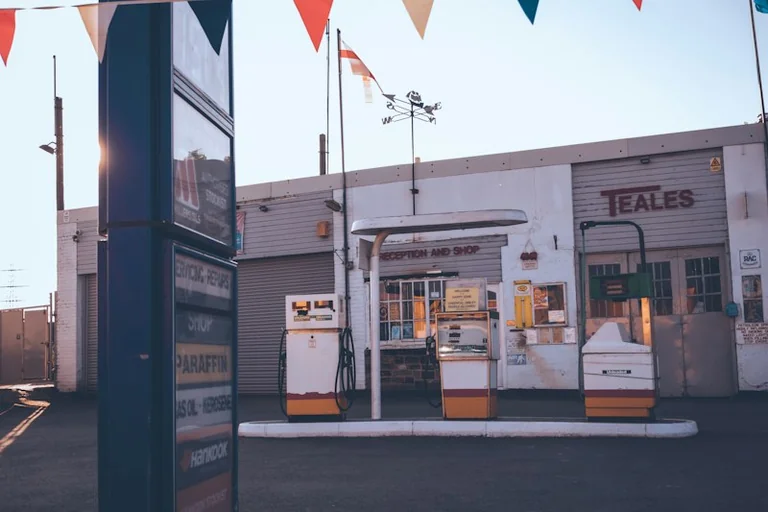
Now suppose the cheaper station adds 12 miles to the round trip. If your car averages 40 miles per gallon, that distance uses about 0.30 gallons, or 1.36 litres. At an assumed fuel cost of £1.46 per litre, the detour uses roughly £1.99 of fuel. In this example, the detour costs more than the £1.60 gross saving, so the cheaper listed forecourt leaves you about 39p worse off before considering extra time or any other costs.
The result changes with your vehicle, the distance, the amount you buy and the price difference. Recalculate with your own fuel economy and route. If you are already passing the cheaper station, the additional mileage may be close to zero and the price saving may make sense.
Check supermarket offer conditions
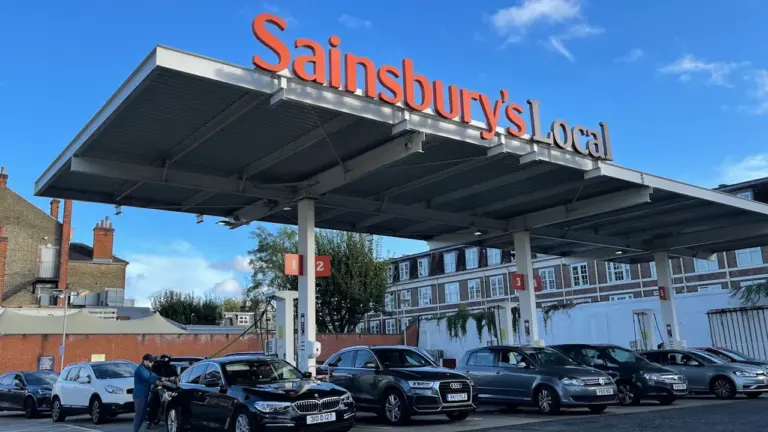
A supermarket-branded forecourt may advertise a discount or link fuel savings to a shop, loyalty account or voucher. Read the offer terms before counting it as a saving. Check whether you must spend a minimum amount, present a voucher, use a particular payment or loyalty method, or buy fuel within a stated period.
Confirm which stations, fuel types and grades qualify, and whether the offer applies to the whole purchase or only up to a limit. A discount that requires shopping you would not otherwise do should not automatically be treated as money saved. Compare the price you will actually pay after meeting the conditions with the price at other reachable forecourts.
Make a final check before setting off
Prices and offer terms can change between your search and arrival. Recheck the selected station’s listed price, opening hours and route shortly before you leave, especially if the stop is important to the plan. If the price listing has no clear timestamp, treat it as a guide rather than a guaranteed pump price.
The CMA’s road fuel market study collection is useful for understanding its monitoring and market work. For the decision on your journey, use current, location-specific listings and your own detour calculation. The cheapest listed forecourt is only the cheapest choice if the total trip cost is lower.
Source: Competition and Markets Authority
Context & actions About this article
Source check How to compare
The comparison method uses current location-specific listings and estimates the fuel cost of extra mileage; the CMA provides context on UK road fuel monitoring.
- Compare the required fuel type and grade.
- Check when each listed price was reported.
- Count the full round-trip detour distance.
- Read any supermarket offer conditions.
- Source
- Competition and Markets Authority
- Scope
- United Kingdom
- Updated
- 2026-10-30 10:02
Source check
Report a trust issue
Send a clear signal to community moderation if the source, facts or context need review.

Comments